The 40 Most Revealing Artist Portraits

4 Comments

Reblogged from LIFE:

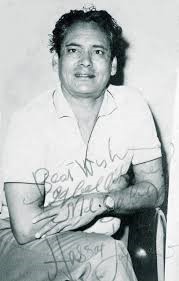
It's always intriguing to see the faces of the creators behind famous works of art. While Picasso, Dali, Matisse and perhaps a handful of other artists are recognized around the world, however, countless other painters and sculptors of note — including some of the finest, most influential artists of the past century — are, in a sense, invisible. Their works endure; but their…

Read more… 226 more words

Carnival of Quality Management Articles and Blogs – May 2013

Leave a comment

Welcome to May 2013 edition of Carnival of Quality Management Articles and Blogs.

We would continue with our practice of putting across the excerpts from the respective post / article without any editorial intervention, so as to get the intent of the article without any dilution.

Let us open the account with some basics

New Website for The W. Edwards Deming Institute

“Some of my favourite content on the new site include the articles, photos, videos, timeline and short descriptions of some of Dr. Deming’s most famous ideas.”

Having a National Quality Award is Only Part of Sustainable Success

So why aren’t their more repeat winners?  Some theories:

For small businesses – the cost is a barrier though some state programs are starting to overcome this issue.

Changes in leadership – all quality award programs require FULL management support and MBNQA is no exception.  The leader who shepherds the organization to winning the MBNQA often does not stick around for another round.  The question becomes for the new leader, what is the ROI for being an award winner and does it generate significant revenue to continue supporting the program?

Economic Conditions – This theory particularly impact non-profit and governmental winners in that these organizations often are not revenue generators.  Budgetary efficiency is a prime driver and the same management questions above are often asked here as well.

MBNQA as a “bolt-on” – This theory is my pet peeve because we really have not addressed the essence of quality programs.  Quality works best when it involves organizational integration.  Usually, a small group is involved in developing the award packets.  “It’s their job to do MBNQA.”   This leads us down the path of “real” ROI to doing MBNQA and it opens itself up for immediate cuts in poor economic situations.

I would contend that a better guideline for a national quality award should be Deming’s 14 Points rather than the MBNQA criteria.

Quality: Ownership and Getting Better  – @ Tanmay

     Quality you deliver has everything to do with how much you own your work. Your work carries your fingerprints. It tells a story about you.

On a long run, compromising on quality of your work because of the external factors and not growing through your work can be both painful and costly!

A Culture of Quality from ASQ TV

Organizations do not survive on good products and services alone. Brien Palmer, author of Making Change Work, relates the importance of a culture of quality for any organization.

Michelin’s Obsession with Quality – To North American company president, Pete Selleck, manufacturing the ‘Michelin way’ means making quality king.  – Travis Hessman | IndustryWeek

“This is proof that process control in our industry is key,” Selleck said. “We all use the same equipment to make tire, so we know it’s not the equipment that makes the difference. It’s the interface between the equipment, the material and the person—the training and the qualification of the person—that makes the difference.”

“Respect for People” and “The Design of the System”Larry Miller

Michel Baudin, a fellow blogger and author, posted a video link of a panel discussion that included Jeffrey Liker (The Toyota Way, Toyota Leadership) in which British consultant John Seddon makes the comment that “This respect for people stuff is horse shit.” Seddon argues that, what leads to improvement is the system and not an intervention to respect or deal better with the people.

On Michel’s blog there then followed what I think was an interesting exchange on the subject between Michel, Mark Graban and myself.

You can find the entire 45 minute panel discussion here: http://vimeo.com/42297077. It is a worthwhile discussion about lean, standard work and the nature of the system.

Respect for people is the result, not only of personal patterns of communication, but also the result of the nature of the system.

Here are just a few ways you can design into your organization’s system respect for people.

  1. On-Boarding Respect – How you bring people, particularly managers, into your organization can set the pattern for the rest of their career with your company.
  2. Leader Standard Work at Gemba – Leaders at every level should spend some time at the front-line, where the work is done.  If, on the other hand, he is scanning the environment for “how can I help them and what can I learn from them?” he is demonstrating respect. Leader standard work should be reviewed at the next level, and the next.
  3. Design Decision Making for Respect
  4. Encourage Experimentation and Improvement – Most continuous improvement, and it is the intention of the PDCA cycle, is simply to cause people to think and to try some possible improvement. There should be no fear in experimenting and failing. That is inherent in the learning process. If you encourage and reward experimentation, you are demonstrating respect for people.

Committing to a cycle of honest communication – Seth Godin

The inability to say the thing that will make everything better (because of fear of shifting the status quo) is a project killer.

The Best Decision You’ll Make Today: Read This Post

Peter Drucker studied decision-making closely and wrote a lot about it, breaking down the process into a series of seven steps. They include:

  • Determine whether a decision is even necessary.
  • Classify the problem. Is it common or unique?
  • Define the problem. What is this situation really all about?
  • Decide on what is right. That is, make the right kind of compromise.
  • Get others to buy the decision.
  • Convert the decision into action—that is, make it somebody’s work assignment and responsibility.

When it came to helping people see if they’d made wrong decisions, however, Drucker advocated a quite straightforward approach. It’s embodied in the seventh of his seven steps: Test the decision against actual results.

“Systematic decision review” was Drucker’s term for it.  “Checking the results of a decision against its expectation shows executives what their strengths are, where they need to improve and where they lack knowledge or information,” Drucker wrote in a 2004 essay for Harvard Business Review. “It shows them their biases.”

How a Manufacturer Improved Communication in Every Department 

How did Nation Pizza and Foods increase efficiency by more than 10%? Take one 190,000 square foot facility, six high-speed lines, over 600 employees and add downtime into the mix, and you have a recipe for improving efficiency. In this free white paper, get the inside story on what this award-winning food products manufacturer did to slice downtime, speed up response time, enhance safety and improve communication in every department — in and outside the plant.  Click here to download.

And, now, a couple of articles on the timeless subject of Qualities of a Leader:

Do You Have a Bad Boss?

The top ten qualities that make a good boss:

  1. Communicates with their boss.
  2. Prevents problems before they occur.
  3. Matches employee skills to the job.
  4. Deals with bad employees.
  5. Shows respect and values every employee.
  6. Focuses on getting the job done and not the time clock.
  7. Is consistent, predictable, and tells the truth.
  8. Communicates with their employees, often.
  9. Coaches and trains others.
  10. Praises employees and rewards good work.

Ariens: Seven Skills of a Lean Leader .- Jill Jusko | IndustryWeek
Ariens CEO outlines qualities needed to sustain the lean journey

1. Servant Leader – A coach and a player

2. Relentless Change – “The journey never ends, and we must be learning forever,

      3.  The Disciplined Chaos – the ability to recognize where you want to go and remain focused on that goal without letting chaos throw you off.

      4. The Benevolent Dictator – dictates of benevolence

  • Be honest.
  • Be fair.
  • Keep our commitments.
  • Respect the individual.
  • Encourage intellectual curiosity.

     5.  Fearless Anxiety -   See challenges as speed bumps

     6.  Cultural Revolution -Ariens described a company’s core values as its “cement.” The revolution is what “goes on above, and the cement allows that to happen.”

     7.  Confident Humility – knowing we will be OK without being complacent

The journey is the destination. When we realize that, that’s when we know we have arrived.”

On that note, we change tracks to the subject of Continual Improvement:

Not every improvement has to be a breakthrough by JAMIE FLINCHBAUGH

Sometimes the best way to maximize Return on Investment is not to look for the high returns but to look for the low investments. Keep it Simple…well, you know the rest.

Transformational Change vs. Continuous Improvement – Lawrence M. Miller, author of “Getting to Lean – Transformational Change Management”

It may sound like sacrilege to hear someone say that continuous improvement may not always be the right answer. Of course, it is the core process of lean management. But, there are times when more significant and more rapid change is required – sometimes revolution rather than evolution is called for.

 The first thing to understand about transformational change is that the external environment — technology, regulation, competition, the economy — is forcing change upon your organization. Your organization is a sub-system of a larger system, and it must align its systems to the external world. Sometimes that external environment demands rapid change that may be uncomfortable for everyone.

Second thing to know is that every organization is a “whole-system.” Lean management is a whole-system. It is not 5S, teams, or process maps. It is everything from the organizational structure, the information system, the decision-making processes, the human resource systems, etc.

Third thing to know: Sub-systems of the whole must be aligned.

Transformational change is not problem-solving. It is designing the whole-system to meet the needs to customers and the future environment. It is an act of creating something, not fixing something.

Transformational change is a process designed to create significant change in the culture and work processes of an organization and produce significant improvement in performance.

Phil Buckleys article “Why don’t we do the things we know we should do?” was primarily written for the “leadership” audience, but is equally relevant for our discussion on Continual Improvement.

An excerpt:

My default behaviour is to keep working until tasks are completed, even when my resources are low.

It’s time to make a change. Here is my plan for breaking this unproductive habit:

  • Make a list each night of non-work activities I will complete on breaks during the following day (I am a list person)
  • Visually display this list beside my priority activities list (visual reminders are powerful)
  • Review my progress nightly (and make notes as I do after my runs)
  • Ask a friend to check in on my progress (I know I will never have “nothing to report”)
  • Reward the desired behaviour (schedule guilt-free play time to spend with family and friends)

And here is our round up of the current edition:

Management Improvement Blog Carnival #192

Management Improvement Blog Carnival #193

Thanks a lot for visiting this carnival… I look forward seeing you when we are here next month.. till then, I keenly look forward to your feedback………..

50 Best Websites 2013| Full List | TIME.com

Leave a comment


50 Best Websites 2013| Full List | TIME.com.   —  TIME’s annual salute to sites and services that keep you entertained and informed, save you time and money — and maybe even change your life

Read more: http://techland.time.com/2013/05/06/50-best-websites-2013/#ixzz2TErxSjwU

Rules for Freelancers | AIM Danışmanlık | Consulting

5 Comments

A very useful, to-the-point, set of guidelines – for remaining free while maintaining schedules and keeping up with promises :

Rules for Freelancers 942039_10101795436093503_457524346_n

Courtesy:  Rules for Freelancers | AIM Danışmanlık | Consulting.

‘A Delicate Truth,’ by John le Carré – NYTimes.com

1 Comment

‘A Delicate Truth,’ by John le Carré – NYTimes.com. – is as good a review as it can be when some one talks of Le Carre’s work.  But that is , possibly because, Olen Steinhauer is the author of eight novels, most recently “An American Spy.” He lives in Budapest.

“A Delicate Truth,” like most of le Carré’s recent novels, feels like a rebuttal to George Smiley’s theory. How many stray cats can we allow to be snuffed in order to reach our ends? Or, as le Carré put it in an essay in last month’s issue of Harper’s, “How far can we go in the rightful defense of our Western values without abandoning them along the way?” Back in 1963, in “The Spy Who Came In From the Cold,” we watched that novel’s stray cat, Liz Gold, die on the Berlin Wall. A shame, yes, but in the grand scheme of things an acceptable loss. Fifty years later, “A Delicate Truth” suggests that even little Liz Gold would be too much of a sacrifice.” 

I have been able to get le Carre book form British Library these days. This is THE 23rd novel, and I have completed just three of them.. WOW.. what a way to go ahead…….


Carnival of Blogs on Golden Era of Hindi Film Music – April 2013

3 Comments

Welcome to April 2013 edition of Carnival of Blogs on Golden Era of Hindi Film Music.

We begin our journey by visiting quite unique tributes /events this month –

SoY has so vividly and even more creatively, weaved in 94th birthday of Shamshad Begum in through one of the most iconic song ever – Mere Piya Gaye Rangoon – in the article ‘Mere piya gaye Rangoon’ and some more Indo-Burmese links . This in turn isso vividly linked to the memory of the pitiable last days of confinement of The Last Moghul Emperor (!) Bahadur Shah Zafar, his poignant ghazals “he wrote in captivity – Lagta nahi hai jee mera ujade dayar mein and Na kisi ki aankh ka noor hun”.   and very pensive renderings of these ghazals by Habib Wali Mohammad , from among several versions. And then going in for, one more link down the chain to MANDALAY, its historical inks with our freedom movement, is nothing sort of a masterstroke of connecting it with the memories of the exile of the last Burmese Emperor to that place, till the present day cultural connections of Myanmar.

The irony of the fate is that Shamshad Begum passed away on 24th April 2013. Long live Shamshad Begum, though the memories of her immortal songs, still alive the hearts of her fans..

Here are a few selected obituaries, from among a flurry of such articles that poured in:

Sangeet ke liye shukriya, Shamshad! By Likhavat

#RIP- Shamshad Begum: A song in her hearWritten by: Gitanjali Roy @ kracktivist    
Shamshad Begum Passes Away at 94 –  Shamshad Begum: The Original Nightingale
Shamshad Begum: A tribute to a voice long gone By Ankush Arora @ India Insight

Jhumka gira re Bareli ke baazaar meinAtul’s Bollywood Song A Day – with full lyrics . The site has presented several ‘gems’ a day earlier.

Farewell, Shamshad Begum, which refers to a post –  ten favorite Shamshad Begum songs – carried on 14th April 2011,  to commemorate her birthday @ Dances On the Footpath

Dusted Off presents “Ten Shamshad Begum songs, which are actually, in the majority of the cases, not from Hindi cinema”.

Shri Shrikant Gautam, in his regular column (in Gujarati), “Raag Rang” in Janmabhoomi Pravasi pens ‘lighter’ dimension of the multi-faceted histrionic virtuosity of Pran, on his being belatedly feted with Phalke Award for 2013 in the article (in the translated ) titled “Hillarious Laughs of a Villain”:

Here are the ‘lighter’ songs that Shri Guatam has picked up when Pran was in the thick of a ‘villainous’ role in the film:

Aake Sidhi Lagi Dil Pe Jaise Katariya – Film: Half Ticket (1962), Music Director: Salil Chaudhary, Playback: Kishore Kumar, in male and female voices.

Subhan Allah Haseen Chehra – Film: Kashmir Ki Kali (1964) – Music Director: O P Nayyar,  Playback: Mohammad Rafi

Dil Ki Umange Hai Jawan – Film: Munimji (1955) – Music Director: S D Burman – One Mr. Thakur has caricatured the portion of the song filmed on Pran.

One more side of that virtuosity is Qawwali of Adikhhar (1971) – Jina Hai Usika Jisne  Yeh Raaz Jaana -  filmed on Pran on the screen – Composed by R D Burman, and sung by Mohammad Rafi. The song is a birth day song, and to that extent can be treated as new experiment of use of quawaali form for such events.

Our knowledgeable and prolific co-reader of the blogs normally covered by these Carnivals, Shri Arun Kumar Deshmukha scored a century of posts on ‘Atul’s Bollywood Song A Day – with full lyrics. The article, “Aa ri sakhi main tohe preet sikha doon’  “which has Historical Importance in Hindi Film Industry of Bombay. MAHAGEET-1937 was THE film for which the FIRST Playback song was recorded and filmed at Bombay”.

We also have two very distinctive sets of songs of Mohammad Rafi –

The first one is, Rare Gems of Mohammad Rafi, by Vijay Bavdekar, has listed 20 songs, the songs that are seemingly gradually fading from the memory, but gems in their own right. I have picked up (with great difficulty) SIX of the songs here:

Us Paar Is Deewwarke Jo Baithe Hai Koi Unse Jake Kahde Hum Jo Kehte Hai – Film: Saiyan (1951)– Music Director: Sajjad

Mohabbat Mein Khudaya –Film: Shahnaz (1948)–Music Director: Ameerbai

Hum To hai Tum Par Dilse Fida Yaar Dedo Hame Kasm-e-Khuda–Film: Bewaqoof (1960)–Music Director: S D Burman

Dilne Pyaar Kiya Hai Ek Bewafase–Film: Shararat (1972)–Music Director: Ganesh

Shaam-e-bahara subah-e-chaman tu mere khwabonki pyaari dulhan –Film Aaja Sanam (1975)–M D Usha Khanna

Ye Kiski Aankhonka Noor Ho Tum Ye Kiska Dilka Quraar Ho Tum-Film: Pakeezah-Music Director:  Gulam Mohammad. This song was not included in the film.

Another very defining list of songs by Mohammad Rafi is Mohammad Rafi and Joy Mukherjee combination had only gave everlasting hits. I have selected FIVE songs from the ones presented in the article for this edition of carnival:

Ae Baby Idhar Aao – Film: Love in Simla (1960) – Music Director: Iqbal Quereshi –  a duet  with Asha Bhosle

Phir Tere Shahr Main  Mitne Ko Chala Aya Hun –Film: Ek Musafir Ek Haseena  (1962)- Music Director:  O P Nayyar  -

Pyar Ki Manzil  Mast Haseen – Film: Ziddi (1964) – Music Director: S D Burman –

Dil Ke Aine Men Tasveer Teri  - Film: Aao Pyar Karen  -Music Director:  Usha Khanna –

Kisne Mujhe Sada Di – Film: Saaz Aur Awaaz -  Music Director: Naushad – a duet with Suman Kalyanpur

The archive of Conversations over Chai also provides us a take on Joy Mukherjeee in Remembering Joy Mukherjee.

And the third one, a standalone song,  is from the ‘messages’ category, Songs movies , on Inde Bollywood and Cie has a range of around 271 songs, as of writing this piece.  We may give quite some them a miss, because they fall beyond the bounds of the scope of the time period that we take up in the carnival. A recent post – Song Sasural (1961) of course has the signature song – Teri Pyari Pyari Surat Ko Nazar Na Lage – from the film, but also has a shot of the Filmfare Title Page of the film. The song clip has the third stanza that is normally seen on the film track only.

We have more sets of articles with a very definite classification:

The songs linked with dancing

Conversations Over Chai presents a refreshing perspective in My Favourites: Stage Performances . We also have another one from the archives – My Favourites: The Courtesan’s Song.

Harvey Pam’s Blog presents 10 of favourites featuring Waheeda Rehman in Dancing Grace, which, as can be expected, have some of the great dance songs.

And that leads us to more links to Whaeeda Rehaman songs -

10 of my Favorite Waheeda Rehman Songs @ Sunahariyaaden – This is a maiden visit to this blog from this carnival platform.

Ten of my favourite Waheeda Rehman songs @Dusted Off

In addition to these, we have some excellent articles on Waheeda Rehman in our February 2013 edition.

Shishir Kuamr Shrama takes up vintage moments, people from the Hindi Films on Beete Hue Din. As of now, it has two articles (in April 2013) – Mera Sunder Sapana Beet Gaya – Kamini Kaushal, which has listed the links to some of the songs that can be treated as high points of Kamini Kaushal’s histrionic career – and “A Crystalline Eyed Bad Man – Kamal Kapoor, that takes us through the actor’s career.

I did find an article on ‘sad songs’ on “Raat Akeli Hai”. However the site seems more focused on film reviews. I would be visiting them often and see if we can catch up something that can be discussed in detail here.

The series ‘Multiple Versions of Songs’ also continues its journey through Multiple Versions Songs (7) – Both Versions By Female Playback Singers (2) – A Happy And A Sad Version.

As I was closing up this carnival, Conversations Over Chai posted an interesting (!) article – My Favourites: Songs of Cynicism, which ought to not ‘merely philosophical’, but ‘cynical’ lyrics as well.

Similarly SoY has presented  us a ‘chance-caused-relation-induced’ 71st birthday greetings and a mine of information  In Conversation with Minoo Mumtaz

To sum up the present edition of the blog carnival, we have Songs for all times:  Celebrating 100 years of Hindi film music from Dusted Off. This is an article prepared for the April-June 2013 issue of ForbesLife India on ‘100 years of Indian cinema’, and documenting the YT channel – The Best of Hindi Movies and TV Shows.

Our pursuit of adding more variety to the articles and /or blogs continues on its pleasant journey…

I do look forward to suggestions, inputs…………….

Carnival of Quality Management and Articles Blog Festival – April 2013

2 Comments

Welcome to April 2013 edition of Carnival of Quality Management and Articles Blog Festival.

I have only three broad divisions of the articles for this month’s edition of the Blog Festival:

One relating to core Quality area, and another relating to areas that leads to a better organization, better life over a period of time, and the other one relating Change Management.

Articles relating to the Core Quality Function -

Four Ways to Measure the Effectiveness of Your Root Cause Analysis Process
Root Cause Analysis is all about improving your bottom line in safety, environmental compliance and profitability. This paper explores measuring the effectiveness of Root Cause Analysis as a business process intended to produce business results. The author provides examples of the primary KPIs that will help you keep your finger firmly on the pulse of your RCA process.

Five Ways to Boost Quality in Manufacturing Operations – John Mills, executive vice president of business development, Rideau Recognition Solutions

  1. Reward success
  2. Measure team performance
  3. Avoid abstract
  4. Study peers and success stories
  5. Process over product

Manufacturing is a precise business that tolerates errors poorly, as Boeing appears to be finding out right now. Strike a balance on your line. Reward teams that find ways to creatively boost output without sacrificing safety. Reserve penalties for only the most serious errors.

And be mindful of history. Every production line experiences trouble from time to time, but recurring mistakes are inexcusable.

And quite useful and interesting articles, from Bizmanuals:

How to Create A Policy & Procedures Manual

Among the tools prescribed to help create the manual, Business Process Map is the heart of the manual creation. And in a related article, Top 10 Policy Procedure Templates, for which the requests keep pouring in, can be browsed.

Management by Procedures is how McDonalds or other successful franchises manage their business.  You start by defining your process using a process map to build visual communication and understanding.  Next, write down what needs to get done, by whom, and when.  Then deploy and practice the procedure.  Perfect the procedure until you have a consistent process just like a franchise would need to roll this out to hundreds of others.

What Process Approach Questions are Used for a Process Audit?
Process auditing is focused on determining process effectiveness and the ability to achieve planned results.

Ask The Experts takes up  a detailed reply to a question relating to Clause 7.6 of ISO 9001-2008 in Measurement System Analysis.

SIPOC – Supplier, Input, Process, Output, Customer – is an interesting method to look at the critical-to=quality requirements of the process. The question on SIPOC relates to healthcare industry, and is thus very useful for quality professionals from other industries to understand the concept.

And omnibus round ups by borawski– of the series of articles under a subject for the month:

Roundup–Quality In Unexpected Places -  for March 2013

Roundup–Risk and Failure in Quality and Science for February 2013

And here is an omnibus collection of the articles that do have a bearing on the quality of life that you live – at the organization, at personal or social levels -

Learn To Prioritize Effectively

To prioritize effectively, it is important to think about what activities, tasks, responsibilities, etc. are most important to you and deserve your time. So how do you decide what is “important?” I use a simple criterion to define what is important and where I spend my time. I define things I can do as good, better, and best.

In a speech given by Dallin H. Oaks speaks about how to prioritize effectively and make correct choices. He spoke about the difference between good, better, and best choices.

Do you have a “Go-To” Top10?

All of us have situations which are problematic. They can range from minor irritations and something irksome, to outright emergencies. We all need a ‘Go-To” Top 10. These will be your top 10 top professional connections to whom you can turn in a crisis or even with a problem or a question.

Five Ways To Turn Your Crisis Into A Comebackby Tim Milburn –

  1. Recognize what got you headed in the wrong direction in the first place. [else, you may be doomed to repeat those things, again and again.]
  2.  Ask yourself: Why?
  3.  Set your sights on a goal, a target.
  4. Do something every day.
  5. Find joy in the process

The Not Knowing Path of Being an Entrepreneur – By Leo Babauta

Lots of people… try to control the outcomes. Unfortunately, the ability to control outcomes is an illusion.

Here’s How to Walk The Not Knowing Path:

  1. Admit you don’t know
  2. Watch for (the source of) anxiety
  3. Tell yourself you’ll be OK
  4. Consider worst-case scenarios
  5. Know your principles
  6. Act on your principles, not on (your) goals or plans
  7. Breathe and  smile.

The Fundamental Problem in ManagementTimothy Kastelle

The fundamental problem in management is that the world is uncertain, and people hate dealing with uncertainty…The problem with requiring certainty is that when you do, you fail to act.. All of the bad aspects of bureaucracy come from trying to build systems that provide certainty in a world that is by its very nature uncertain…The more businesses I work in and talk with, the more convinced I become that the single most important management skill to develop is a tolerance for ambiguity.

Dr. Deming’s Joy at Work, Happiness & the High Performance Organization – Key factors that lead to a happy life also have direct implications for creating a happy and productive workplace. – Lawrence M. Miller, www.ManagementMeditations.com

  1. Build great teams! Be sure that every employee serves on a well-functioning team with knowledge of its purpose and its performance. Encourage celebration of winning team goals and setting records.
  2. Build internal social networks. Build social networks around common interests and competencies. These become learning networks that provide both the joy of social relationships but also the joy of learning.
  3. Be sure to practice respect for people and recognize that the world’s greatest experts are those who are on-the-spot, with their hands on the work. This builds their self-esteem and encourages learning.
  4. Institute a process of gaining flexibility through multi-skilled, cross trained employees who can optimize the effectiveness of their teams.
  5. Stop wasting money where it doesn’t pay off and spend it where it does. Pay employees for gaining skills and achieving performance. Value high performance by paying for it.
  6. Know and promote the worthy purpose of your organization. Ennoble your employees by connecting them to a spirit of service. This is the essence of leadership.
  7. Hire optimists and not pessimists. Generate hope and optimism by clearly stating where we are going and why it will be great when we get there. Generate creative dissatisfaction in yourself and your employees.

Five Questions CEOs Should Ask about their Supply Chain

Minimizing supply-chain-disruptions requires taking a best-in-class approach from the highest levels of the company – Brian Nolf and Gerhard Plenert, Wipro Consulting Services

1. Is quality built into your supply chain, or do inspection and correction occur after the fact?

2. Is supply chain management a strategic senior level position in your organization or is it a part of an operations activity?

3. Is the movement of information and money as critical in your supply chain as the movement of materials? In other words, does it take longer to create paperwork and process payments than it takes to deliver the goods?

4. Do you have a built-in change management process that constantly reviews the elements of your supply chain and looks for opportunities to improve quality and operational efficiency—or do your systems, policies and procedures block improvement?

5. Does your supply chain minimize the amount of touches and the touch time in supply chain transactions, so as to reduce the number of potential failure points?

The issues surrounding these five questions revolve around culture; capability, flexibility, capacity and technology; systems and processes; repeatability and reliability; and collaboration.

Understanding Quality: Duty Towards Self – Tanmay Vora
“The place to improve the world is first in one’s own heart and head and hands, and then work outward from there.” – Robert M. Pirzig

THE 10/10/10 RULE FOR TOUGH DECISIONS – BY: CHIP HEATH AND DAN HEATH
It’s good to sleep on it when there are tough choices to make, but you also need a strategy once you wake up–which is why you should employ the 10/10/10 rule.
To use 10/10/10, we think about our decisions on three different time frames:

  • How will we feel about it 10 minutes from now?
  • How about 10 months from now?
  • How about 10 years from now?

WHY THE FUTURE OF INNOVATION IS IN IDEAS, NOT PRODUCTS – BY: KAIHAN KRIPPENDORFF
As we kicked off the 18-hour flight home, I devoured a series of articles in theSingapore Times featuring the winners of the “Singapore Business Awards”: a doctor, an insurance CEO, an advertising exec, and a coffee product seller. Each started careers with little and now leads huge, fast-growing, disruptive businesses.

Dissect the reasons they give for their success and you will see a series of what I call “fourth options”: strategic choices that your customers love and that your competitors won’t copy.

Income points to what it takes to introduce a “fourth option.” First, you introduce a new concept or distinction (e.g., “honest insurance”). This new term is a language tool that helps people reshape how you do things. It is not a new product, but something else–a concept or narrative or category. Second, this new concept starts changing behavior (people change their KPIs, shift their processes). Third, this new set of behaviors allows you to do something different and new (e.g., pay out where others won’t). Finally, competitors want to copy you but decide that to do so require too much behavioral change to be worth it.

Jesse Lyn Stoner  culls out these The 6 Benchmarks of High Performance Teams
1)       Alignment: Alignment around a shared vision.
2)      Team Effectiveness: Effective team processes.>
3)      Empowerment: Power to do what is necessary.
4)      Passion: Energy, enthusiasm, and confidence.
5)      Commitment: Deep commitment to the team and to each other.
6)      Results: Sustained outstanding results.
We also have three articles relating to Change Management:

The first one dates back to April 2004 on ‘strategy + business’: – 10 Principles of Change Management – Tools and techniques to help companies transform quickly. – By John Jones, DeAnne Aguirre, and Matthew Calderone

We have a current related article, too:

The Discipline of Managing Disruption – To Harvard professor Clayton Christensen, coauthor of How Will You Measure Your Life?, a primary task of leadership is asking questions that anticipate great challenges. -  by Art Kleiner
Clayton Christensen’s most recent book, How Will You Measure Your Life? (coauthored with James Allworth and Karen Dillon, HarperBusiness, 2012), links the discipline of managing disruption to the kind of long-term thinking that is necessary if one is to step past today’s pressures and build a strong personal and professional legacy.

The Agility Factorby Thomas Williams, Christopher G. Worley, and Edward E. Lawler III

When the measure of performance is profitability, a few large companies in every industry consistently outperform their peers over extended periods. And they maintain this performance edge even in the face of significant business change in their competitive environments. The one factor they seem to have in common is agility. They adapt to business change more quickly and reliably than their competitors; they have found a way to turn as quickly as speedboats when necessary.

To round up the present edition we will take a look at Management Carnivals lined up by John Hunter

Management Improvement Blog Carnival #188

Management Improvement Blog Carnival #189

Management Improvement Blog Carnival #190

Management Improvement Blog Carnival #191

I keenly await your feedback, as well as inputs for making the this carnival more varied and informative.

Older Entries

Follow

Get every new post delivered to your Inbox.

Join 46 other followers